
Electrical safety risks that produce the most residential fires and injuries aren’t dramatic. They’re the habits and conditions that homeowners have lived with for so long they’ve stopped seeing them as risks: the power strip running five high-draw appliances, the extension cord under the rug, the bathroom outlet without a cover, the dryer that hasn’t been serviced in a decade. Recognizing everyday risks is the first step toward addressing them.
Electrical Safety 101: Everyday Habits That Create Risk
The electrical risks most homeowners underestimate are those created not by defective equipment but by the ways functional equipment is used, patterns that develop gradually and persist because nothing dramatic has happened yet. Power strip and extension cord misuse is the most consistently documented residential electrical safety hazard. Extension cords are rated for temporary use, not permanent wiring solutions. An extension cord running under a rug concentrates heat without dissipation, degrades insulation invisibly, and produces the arc fault condition that ignites material above it. The correct solution is installing an additional outlet.
Power strips deserve specific attention because their function is frequently misunderstood. A power strip adds outlets; it doesn’t add circuit capacity. Plugging a refrigerator, microwave, and space heater into the same strip puts all three on a single circuit drawing simultaneous high loads, overheating the strip’s wiring regardless of whether it has a built-in breaker. High-draw appliances should plug directly into dedicated wall outlets. Light bulbs installed above a fixture’s rated wattage produce heat accumulation at the socket, sustained heat that degrades insulation, scorches wire, and causes fires in the surrounding attic or wall space. The maximum wattage is printed inside every light fixture and is a specification rather than a suggestion.
Electrical Safety in Wet and High-Traffic Areas
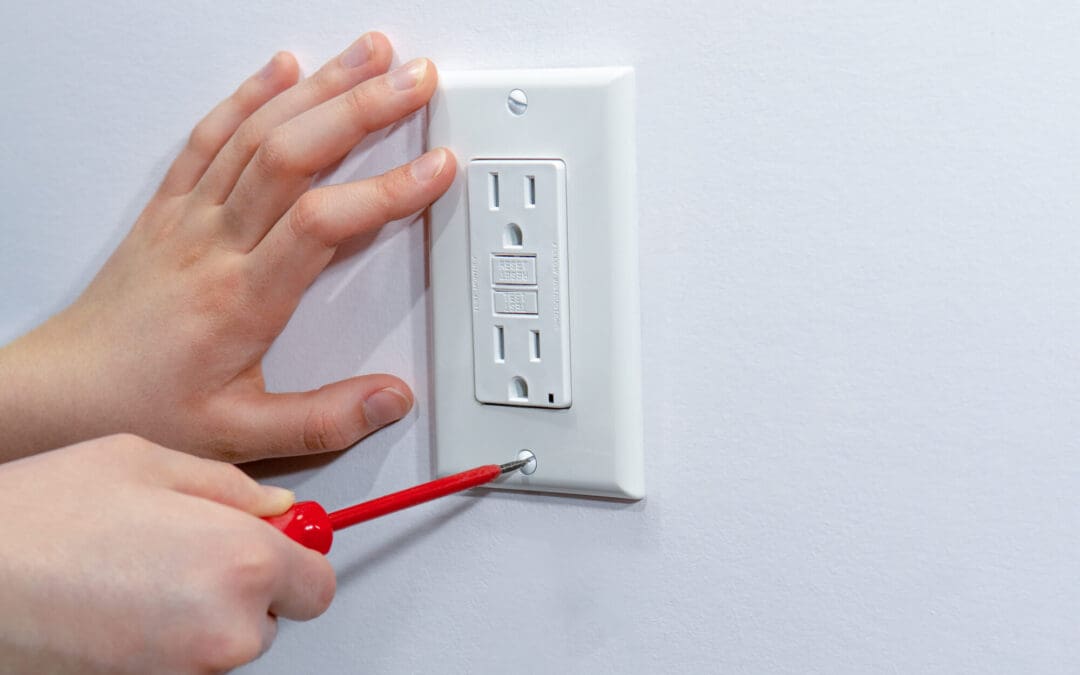
The rooms that concentrate the most electrical safety risk in most homes are those that combine water and electricity, kitchens, bathrooms, garages, and outdoor areas, and those that see the most continuous electrical equipment use. Bathroom electrical safety begins with GFCI protection at every outlet, a code requirement in modern construction that many older homes still lack. A standard outlet within reach of a water source is an electrocution risk. Testing GFCI outlets monthly using the built-in test button confirms the protection is active. Kitchen electrical safety involves water, cooking surfaces, and high-draw appliances in proximity. Toasters, coffee makers, and small appliances left plugged in when not in use draw standby current and represent ignition risk if a fault develops. Unplugging small kitchen appliances when not in use reduces both energy consumption and the risk of an unattended fault.
Warning Signs That Deserve Immediate Attention
A burning smell from an outlet, switch, or near the electrical panel is an electrical safety emergency rather than an inconvenience. Char marks, discoloration, or a warm outlet plate are physical indicators of arcing or overheating already in progress. Lights that flicker beyond a loose bulb, breakers that trip consistently on specific circuits, and outlets that spark when devices are plugged in all communicate that something is operating outside safe parameters. These conditions warrant a licensed electrician — not a reset, a retry, or a wait-and-see.
Frequently Asked Questions (FAQs)
Is it safe to use a power strip as a permanent outlet solution?
A power strip is appropriate for low-draw electronics but not for high-draw appliances like refrigerators, microwaves, space heaters, or air conditioners. These should plug directly into dedicated wall outlets. Using a power strip for high-draw appliances is a leading cause of residential electrical fires.
How do I test my GFCI outlets and how often should I do it?
Press the test button on the GFCI outlet; the outlet should lose power. Press reset to restore it. Test monthly. A GFCI that doesn’t cut power when tested has failed and should be replaced; it provides zero electrical safety protection despite its appearance. GFCI outlets should be in all bathroom, kitchen, garage, and outdoor locations. In older homes where these haven’t been updated, replacement is a straightforward electrical safety improvement.
What should I do if an outlet or switch feels warm or has scorch marks?
Stop using it immediately and have a licensed electrician assess it before it’s used again. A warm outlet plate and scorch marks are indicators of arcing or overheating already underway, conditions that don’t resolve on their own and that represent active fire risk if the circuit continues to operate. This is not a situation to monitor or defer; address it the same day it’s noticed.
How do I know if my home’s wiring is a safety risk?
Age and wiring type are the primary indicators. Homes with knob and tube wiring, found before roughly 1940, or aluminum branch circuit wiring from 1965 to 1973 warrant professional assessment. Federal Pacific or Zinsco panels have documented reliability concerns requiring professional evaluation. Any home regularly experiencing tripping breakers, flickering lights, or warm outlets has electrical conditions worth investigating professionally before they develop further.
Are smart home devices safe to leave plugged in continuously?
Most modern smart home devices are designed for continuous operation and carry safety certifications reflecting that use. The electrical safety concern applies more to older or uncertified equipment, particularly cheap adapters and chargers. Using devices with UL, ETL, or other recognized safety certifications, avoiding uncertified chargers, and not covering heat-generating plugged-in devices are the habits that apply specifically to smart home equipment.
Homesmith Home Inspections offers Home Inspections in the Houston, Texas, area. Contact us to request our services.